

Product Details
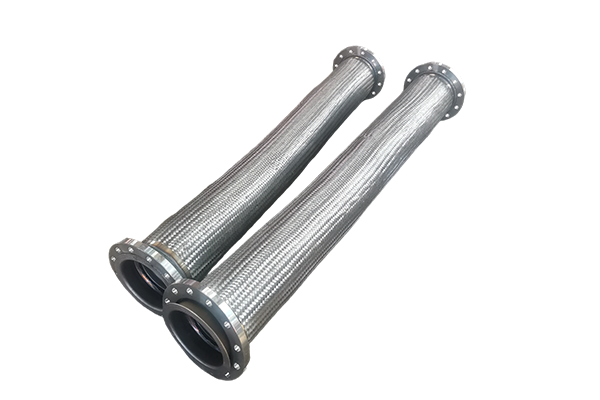
Metal Hose Replacement
Proactive Maintenance for System Integrity&Safety
Metal Hose Replacement is a critical maintenance procedure involving the scheduled or unscheduled removal and substitution of a flexible metal hose assembly.Timely replacement is essential to prevent unexpected failures,ensure operational safety,maintain system performance,and comply with industry regulations.
Indicators for Required Replacement
Proactive inspection should trigger replacement if any of the following are observed:
Visible Damage:
Braiding:Broken,frayed,or severely corroded wires in the braid.Birdcaging(braid pushing away from the core)is a critical failure sign.
Core:Dents,kinks,deep scratches,or visible corrosion on the corrugated inner core.
Fittings:Significant corrosion,cracks,or deformation at the fitting-to-hose junction(the"neck").
Leakage:Any visible leak at the fittings or through the hose body.Soap bubble testing can identify smaller leaks.Never ignore a leak.
Excessive Movement or Deformation:Hose is stretched,severely twisted beyond its design limits,or shows signs of"squirming"(lateral buckling)under pressure.
End of Service Life:Replacement based on operating hours,thermal cycles,or time in service as recommended by the manufacturer or internal preventive maintenance schedules,even if no visible defects are present.
The Replacement Process:A Systematic Approach
System Shutdown&Depressurization:Safely isolate,depressurize,and purge(if handling hazardous media)the system according to lockout/tagout(LOTO)procedures.
Identification&Specification:
Record Existing Specs:Note the old hose's length,inner diameter,material markings,braid type,and end fitting details(type,size,standard).
Analyze Failure Mode:Determine why the hose failed(e.g.,vibration fatigue,over-pressure,corrosion,improper installation)to ensure the replacement addresses the root cause.
Procurement:Source the correct replacement hose,either an exact OEM equivalent or an engineered upgrade that resolves the failure cause(e.g.,a double braid instead of single braid).
Safe Removal:Carefully disconnect the old hose.Inspect the mating flanges or threads on the permanent equipment for damage,corrosion,or worn gasket surfaces.Clean these surfaces thoroughly.
Correct Installation of New Hose:
Avoid Pre-Stress:Install the hose in a neutral,relaxed position—never twist,stretch,or compress it to fit.It must be the correct length.
Observe Bend Radius:Ensure bends are not tighter than the hose's specified minimum bend radius.
Proper Alignment:Align fittings properly before tightening to avoid imposing lateral stress.Use a second wrench to hold the hose fitting stationary while tightening the mating nut to prevent twisting the hose.
Torque Fittings Correctly:Use a torque wrench on flanged connections.For threaded fittings,follow standards to avoid under/over-tightening.
Pressure Testing&Commissioning:After installation,perform a controlled pressure test and leak check before returning the system to full service.
 Recommended News
-
What are the typical application scenarios for marble platforms in precision instrument assembly?
2026-01-06 11:04:39
-
What are the key parameters to consider when selecting a marble platform?
2026-01-05 11:03:18
-
How to Prevent Accuracy Degradation of Marble Platforms After Long-Term Use?
2026-01-04 11:01:28
-
Marble Platform vs. Granite Platform: Which Material is More Suitable for High-Precision Measurement?
2026-01-03 10:58:16
Contact Us
—— Hotline:+86 13833738896
—— Hotline:+86 17332777263
—— Email:gongliliangju@163.com
—— Whatsapp:+8615832706206
—— Address:Beihan Village, Haocun Town, Botou City, Cangzhou City, Hebei Province, China