





NewsDetails
Welding Table Explained for Beginners: Everything You Need to Know
author:jinchang time:2026-07-01 21:19:55 click:101
For anyone entering fabrication, metalworking, or industrial maintenance, a welding table is one of the first and most important investments for the workshop. Far from being just a flat surface to work on, a quality welding table provides a stable, grounded, and precision work platform that directly influences the quality of every weld, cut, and assembly produced in the shop. Understanding the different types, materials, and features available helps beginners make purchasing decisions that support their work quality for years to come.
This beginner's guide explains the core concepts behind welding table design, material choices, sizing considerations, and the features that distinguish professional-grade tables from basic alternatives. The information applies to home workshops, job sites, and light industrial fabrication environments.
What Exactly Is a Welding Table?
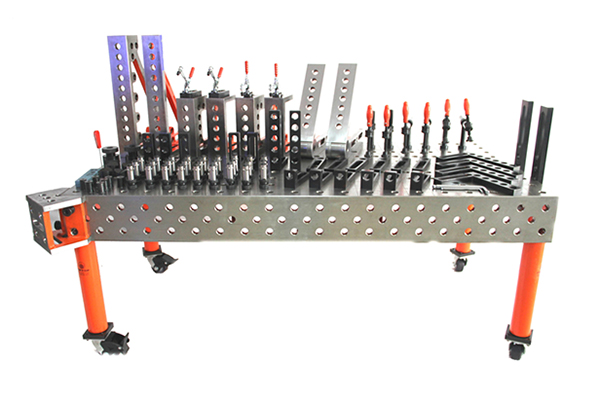
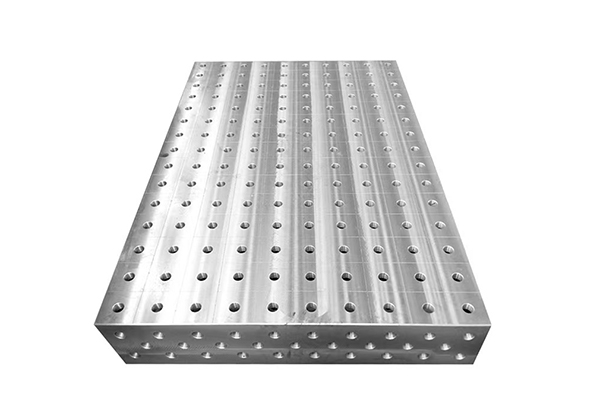
A welding table is a heavy-duty, flat work surface designed specifically to support welding operations. Its functions extend well beyond providing a flat surface: it serves as an electrical ground for the welding circuit, a clamping platform for holding workpieces, a heat-resistant surface that tolerates welding spatter and slag, and a dimensional reference for aligning components during assembly.
Unlike standard workbenches or tables, a welding table must withstand extreme conditions that would destroy conventional furniture. Arc welding generates temperatures exceeding 6,500°F at the arc point, with heat radiating outward to the table surface. Molten metal spatter lands on the table repeatedly during typical welding operations. Heavy steel components weighing hundreds of pounds rest on the surface during fabrication. The table must handle all of this without warping, corrosion, or structural degradation.
Professional welding tables incorporate design features that facilitate efficient work — threaded mounting holes for clamps and fixtures, integral ground connections for welding current return, and adjustable leveling systems that compensate for uneven workshop floors. These features transform the table from a passive surface into an active tool that improves work quality and productivity.
Steel vs. Cast Iron: Choosing the Right Table Material
Carbon steel is the most common welding table material for good reason. Steel tops ranging from 0.375 inches to over 1.5 inches thick provide excellent structural rigidity, resist warping under thermal cycling, and offer sufficient mass to dampen vibration during grinding and hammering operations. Steel tables are also weldable — allowing operators to tack-weld fixtures or stops directly to the tabletop when needed, then grind them off afterward.
Cast iron welding table surfaces offer superior flatness and vibration damping compared to steel alternatives. The graphite microstructure in cast iron absorbs vibration energy that would otherwise transfer through the table and into the workpiece. Cast iron's natural flatness — achieved through precision machining after casting — provides an excellent reference surface for precision assembly work. However, cast iron is brittle and cannot be welded directly, limiting fixture attachment options.
Aluminum welding tables serve specific niche applications where weight savings and spark resistance matter. Aluminum is significantly lighter than steel, making aluminum tables portable for field welding applications. The non-sparking characteristic reduces fire hazards in environments with flammable materials. However, aluminum's lower melting point (1,220°F) and higher thermal expansion coefficient limit its suitability for high-amperage or heavy-duty welding applications.
Understanding Table Thickness and Load Capacity
Tabletop thickness directly determines how well a welding table maintains flatness under load and heat exposure. Thin surfaces — below 0.25 inches — warp quickly under welding heat cycles, developing uneven areas that compromise workpiece alignment. For reliable workshop use, a minimum thickness of 0.375 inches (3/8 inch) provides acceptable performance for light fabrication work.
Medium-duty fabrication involving components up to 200 pounds benefits from 0.5-inch to 0.75-inch tabletop thickness. These surfaces resist deflection under workpiece weight and maintain flatness through typical welding heat cycles. Heavy-duty applications — structural steel fabrication, large assemblies, and production welding — require 1-inch or thicker tops that provide the rigidity and thermal mass needed for demanding work.
Load capacity extends beyond the tabletop to the entire support structure. A thick tabletop on lightweight legs provides no benefit if the frame deflects under load. Quality welding table designs use box-section steel or heavy-angle iron for leg construction, with cross-bracing that prevents racking and lateral deflection. Published load ratings should account for both static loads — components resting on the table — and dynamic loads from workpiece placement and clamping forces.
Sizing Your Welding Table: Dimensions That Work
Table dimensions determine the range of workpieces that can be accommodated without repositioning. For beginners, a table measuring 36 inches by 24 inches provides a practical starting point that handles most small to medium projects while fitting within typical workshop space constraints. This size accommodates bracket assemblies, pipe spooling, plate gussets, and similar components common in general fabrication.
Medium fabrication shops typically use tables in the 48-inch by 30-inch range, providing sufficient surface area for larger assemblies without overwhelming workshop floor space. These tables handle pipe fittings, structural connections, and multi-component assemblies commonly encountered in commercial fabrication work.
Work height deserves careful consideration. The standard recommendation positions the tabletop at approximately elbow height when standing — typically 36 to 40 inches for average-height operators. Adjustable-height tables accommodate multiple operators and different work types, allowing lower positioning for overhead welding and higher positioning for flat and horizontal work.
Available workshop floor space constrains maximum practical table size. Allow at least 24 inches of clearance around the table perimeter for operator movement, material handling, and access to clamping points. A table that fills the available space may be technically impressive but practically frustrating if operators cannot move freely around workpieces.
Key Features That Improve Workshop Productivity
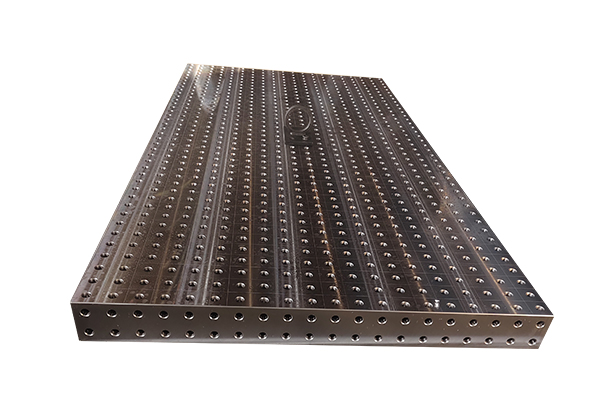
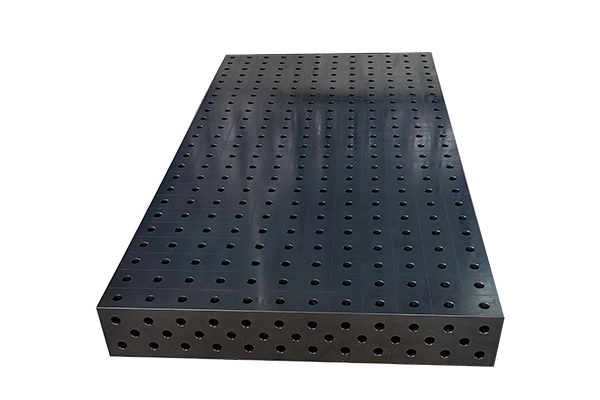
Threaded mounting holes arranged in a grid pattern across the welding table surface represent the single most productivity-enhancing feature for fabrication work. Standard hole spacing of 2 inches (50mm) with 16mm or 5/8-inch threads accepts a wide range of commercially available clamps, stops, and fixture blocks. This system enables rapid workpiece positioning and secure clamping from any angle, reducing setup time dramatically compared to C-clamp or toggle clamp approaches.
Built-in ground clamp connections provide dedicated attachment points for welding leads. Quality welding table designs include heavy-duty ground studs or brackets welded to the frame, ensuring low-resistance electrical contact for stable arc performance. Clean metal-to-metal contact at ground points is essential — painted or coated surfaces create resistance that causes arc instability and erratic weld quality.
Adjustable leveling feet compensate for workshop floors that are rarely perfectly flat. Heavy-duty leveling pads with sufficient adjustment range — typically 1 to 2 inches — allow the table to achieve a stable, level position regardless of floor conditions. Locking mechanisms prevent drift during operations involving vibration or lateral forces.
Side rails and accessory slots extend the table's functionality beyond the flat surface. Clamp rails along table edges accept additional fixture hardware, while accessory slots accommodate tool holders, wire feed guides, and auxiliary lighting. These features keep essential tools within arm's reach and reduce the time spent searching for equipment during fabrication sequences.
Electrical Grounding: Safety and Performance
Proper electrical grounding of the welding table serves two purposes — personnel safety and welding performance. The table functions as the work return conductor in most welding circuits, carrying current from the workpiece back to the welding power source. Poor ground connections create voltage drops that cause unstable arcs, inconsistent penetration, and increased spatter.
Ground connection quality depends on clean, tight metal-to-metal contact between the ground clamp, the table surface, and the workpiece. Tables with painted, coated, or corroded surfaces require grinding or wire brushing the contact area before each welding session. Many professional tables include dedicated ground studs welded directly to the structural frame, providing clean attachment points that maintain reliable contact over time.
Safety standards address grounding requirements for welding equipment. OSHA 29 CFR 1910.254 specifies that welding equipment grounding must follow the equipment manufacturer's instructions and applicable electrical codes. Using the welding table as the primary ground return — rather than running a separate ground lead to the workpiece — is standard practice for most fabrication operations, provided the table maintains adequate electrical continuity.
Maintenance Tips to Extend Welding Table Life
Regular cleaning removes welding spatter, slag, and metal debris that accumulate on the table surface over time. A chipping hammer and wire brush remove most spatter deposits, while periodic surface grinding restores severely spatter-accumulated areas to clean metal. Avoid aggressive grinding that removes tabletop material — each grinding pass reduces the effective thickness and potentially introduces surface irregularities.
Surface flatness should be verified periodically using a straightedge and feeler gauge set. Measure the tabletop in multiple directions to identify developing warpage from repeated thermal cycling. Minor warpage can be corrected through controlled surface grinding using a magnetic base angle grinder with a flat disc. Significant warpage may require professional surface milling to restore flatness.
Leveling feet should be checked monthly for position stability. Workshop vibration from nearby equipment, thermal cycling, and floor settlement gradually shift leveling adjustments. Re-verify table level using a precision spirit level or digital inclinometer, and adjust feet as needed. Maintaining a level table surface improves workpiece alignment accuracy and operator comfort during extended welding sessions.
Frequently Asked Questions
What size welding table does a beginner need?
For a beginner's first table, a surface area of approximately 36 inches by 24 inches provides a practical balance of workspace and shop floor compatibility. This size handles most small to medium fabrication projects encountered during skill development. As experience grows and projects become larger, a 48-inch by 30-inch table offers expanded capability for more ambitious fabrication work.
Do I really need a dedicated welding table, or can I use any metal surface?
While any metal surface can technically serve as a welding platform, a dedicated welding table provides features that significantly improve work quality and safety. Grounding provisions ensure stable arc performance, flat surfaces improve workpiece alignment, threaded holes enable efficient clamping, and load-rated construction provides reliable support. Improvised surfaces lack these features and often produce inconsistent welding results.
How do I protect my welding table from spatter buildup?
Apply anti-spatter spray to the table surface before welding sessions. This coating prevents spatter adhesion, allowing easy removal with a wire brush or chipping hammer. For high-production welding, consider using copper or brass backing strips that resist spatter adhesion and can be replaced when contaminated. Regular cleaning between projects prevents spatter accumulation from becoming difficult to remove.
Can I weld directly on my welding table surface?
Yes, for carbon steel tables, tacking and light welding directly on the tabletop is common practice. However, avoid deep penetration welding or extended arc exposure on the same spot, which can create deep craters that compromise surface flatness. For stainless steel or aluminum welding, use a dedicated backing plate to prevent cross-contamination from carbon steel residue embedded in the table surface.
What is the difference between a welding table and a regular workbench?
Welding tables differ from regular workbenches in several critical ways: they are constructed from heavy-gauge steel or cast iron to withstand welding heat and heavy loads, they provide electrical grounding provisions for the welding circuit, they feature heat and spatter-resistant surfaces, and they typically include threaded mounting systems for clamping fixtures. Standard workbenches lack the structural strength, electrical conductivity, and thermal resistance required for welding operations.
Conclusion
A welding table is far more than a convenient flat surface — it is a foundational tool that directly affects every aspect of fabrication work quality, efficiency, and safety. Understanding the fundamentals of table material, thickness, sizing, features, grounding, and maintenance enables beginners to select tables that serve their needs effectively as their skills develop. The investment in a properly specified welding table from the outset provides returns through improved weld quality, faster setup times, and reliable performance that supports years of productive workshop activity.
References
AWS D1.1/D1.1M — Structural Welding Code: Steel
OSHA 29 CFR 1910.254 — Arc Welding and Cutting Safety
Jeffus, L. (2012). Welding Principles and Applications, 7th Edition. Cengage Learning.
ASM Handbook Volume 6A — Welding Fundamentals and Processes
ISO 3834-2 — Comprehensive Quality Requirements for Fusion Welding of Metallic Materials
 Recommended Products
 Contact Us
—— Hotline:+86 13833738896
—— Hotline:+86 17332777263
—— Email:gongliliangju@163.com
—— Whatsapp:+8615832706206
—— Whatsapp:+8615931710409
—— Address:Beihan Village, Haocun Town, Botou City, Cangzhou City, Hebei Province, China