






NewsDetails
Welding Table Application Case Analysis: Real-World Results Across Industries
author:jinchang time:2026-07-05 08:02:38 click:68
Selecting the right welding table is a significant capital decision, and purchasing teams rightly demand evidence that the investment delivers measurable returns. Theory and specifications matter, but nothing convinces like documented results from real production environments. This article presents a welding table application case analysis across three distinct industries - structural steel fabrication, automotive component manufacturing, and heavy equipment assembly - demonstrating how different organizations implemented modular welding tables, the challenges they faced, and the quantifiable outcomes they achieved.
Case 1: Structural Steel Fabricator Reduces Fixture Inventory
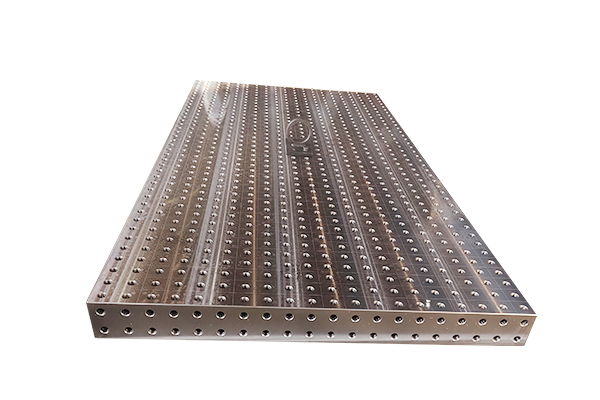
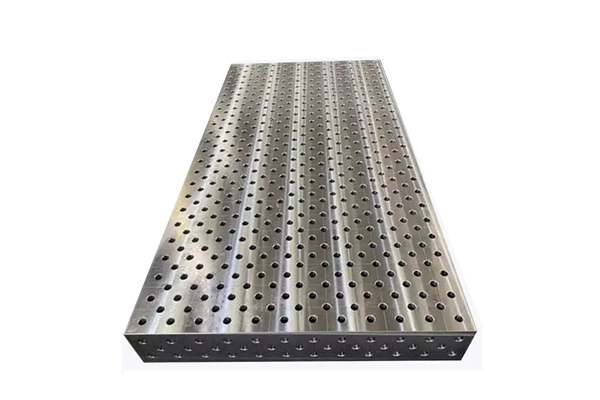
A mid-size structural steel fabricator in the southeastern United States produced 35 different beam and column configurations for commercial construction projects. The company maintained a fixture inventory of 42 dedicated welding jigs occupying 400 square meters of floor space. Average fixture changeover required 3.5 hours, and each new project required 2-4 weeks of tool room time to build custom fixtures. After implementing a modular welding table system with two 2,000 mm by 3,000 mm base plates and comprehensive clamping kits, the company achieved the following results over 18 months: dedicated fixture inventory reduced from 42 to 8 (the remaining 8 serve ultra-high-volume single parts), floor space for fixture storage reduced by 280 square meters, average changeover time dropped from 3.5 hours to 22 minutes, and annual tool room costs for new fixture fabrication decreased by $62,000.
Case 2: Automotive Tier 2 Supplier Accelerates Prototype Development
An automotive Tier 2 supplier manufacturing exhaust system components faced pressure from OEM customers to reduce prototype lead times. Under their previous workflow, each new exhaust prototype required a custom welding fixture with 6-8 weeks design-and-build lead time, costing $4,000-$8,000 per fixture. Prototypes frequently required 2-3 design iterations, each incurring additional fixture modifications. After transitioning to a welding table with 3D modular fixturing capability, the supplier reported: prototype fixture build time dropped from 6-8 weeks to same-day assembly, fixture cost per prototype decreased from $6,000 average to $0 incremental cost (components were already in inventory), design iteration cycle time reduced from 3 weeks to 1 day, and the supplier won two new OEM programs by promising faster prototype delivery. This welding table application case analysis demonstrates that the value of modular fixturing extends beyond direct cost savings to competitive positioning.
Case 3: Heavy Equipment Manufacturer Improves Weld Quality
A construction equipment manufacturer welding excavator boom assemblies weighing 600-900 kg experienced persistent quality issues with a legacy dedicated fixture approach. The problem: uneven clamping force from manual C-clamps caused part distortion during welding, resulting in a 12 percent rework rate on critical boom welds. Each rework cycle consumed 45 minutes of welder time and required re-inspection by the quality department. After implementing a heavy-duty welding table system with hydraulic clamping, the manufacturer achieved: rework rate on boom assemblies dropped from 12 percent to 2.5 percent, annual rework labor cost savings of $38,000, inspection throughput improved by 30 percent due to fewer rework loops, and customer quality audit findings related to weld distortion dropped to zero. The hydraulic clamps delivered consistent, calibrated force that manual C-clamps could not replicate, directly translating to improved first-pass yield.
Common Success Factors Across All Three Cases
This welding table application case analysis reveals several common factors that contributed to success across all three implementations. First, each organization invested in operator training before deployment, ensuring that setup procedures were standardized from the beginning. Second, each company documented fixture configurations with photographs and grid coordinates, enabling repeatable setups regardless of operator. Third, management committed to the transition by removing legacy dedicated fixtures from the production floor rather than keeping them as fallbacks, which would have undermined adoption. Fourth, each implementation started with a pilot area rather than a facility-wide rollout, allowing the team to refine procedures before scaling. These organizational practices proved as important as the equipment itself in achieving positive outcomes.
ROI Timeline Comparison
Return on investment timelines varied by application. The structural fabricator achieved ROI in 5 months through eliminated fixture fabrication costs and recovered floor space. The automotive supplier reached ROI in 7 months through prototype cost elimination and new business revenue. The heavy equipment manufacturer achieved ROI in 4 months through rework cost reduction. Across all three cases, the average ROI period was 5.3 months. These results are consistent with industry surveys showing that modular welding table systems typically deliver ROI within 3-8 months depending on application complexity and production volume.
Lessons Learned: Avoiding Common Implementation Pitfalls
Not every implementation proceeds smoothly. Common pitfalls observed in welding table application case analysis data include: under-investing in clamping component variety (purchasing a base plate without sufficient clamps limits configuration capability), failing to allocate time for fixture configuration documentation during initial setups (creating future rework), and attempting to use the modular system for ultra-high-volume single parts where dedicated fixtures genuinely offer faster cycle times. Successful implementations allocate a dedicated project lead for the first 30 days, budget for 120-150 percent of the minimum recommended clamping kit, and establish clear criteria for which parts use modular fixturing versus dedicated fixtures.
Measuring Success: Key Performance Indicators
Organizations evaluating their own welding table investment should track these KPIs: fixture changeover time (before and after), dedicated fixture inventory count, annual fixture fabrication cost, rework rate on welded assemblies, floor space allocated to fixture storage, and time from receipt of new part drawing to first welded part. Collecting baseline data before implementation enables accurate before-and-after comparison that justifies the investment to management and supports continuous improvement efforts.
FAQ: Welding Table Application Case Analysis
What is the typical ROI period for a modular welding table?
Most implementations achieve ROI within 3-8 months. Facilities with high changeover frequency and multiple part configurations tend to see faster returns. The primary savings come from eliminated dedicated fixture costs, reduced changeover time, and lower rework rates.
Should a facility replace all dedicated fixtures with modular welding tables?
No. Dedicated fixtures remain the better choice for ultra-high-volume single parts where load/unload speed is the primary driver. Modular systems excel in multi-part, high-mix environments. Most facilities retain dedicated fixtures for their top 3-5 highest-volume parts.
How long does it take operators to become proficient with modular fixturing?
Most operators achieve basic proficiency within 1-2 weeks of daily use. Full proficiency - including efficient configuration planning and documentation - typically develops over 4-6 weeks with proper training support.
What is the biggest risk in transitioning to modular welding tables?
The biggest risk is under-investing in clamping components. A well-equipped base plate with insufficient clamps limits the system's capability and frustrates operators. Budget for at least 120 percent of the manufacturer's recommended clamping kit for your application range.
Conclusion
This welding table application case analysis demonstrates that modular welding tables deliver measurable, documentable returns across diverse industrial applications. Whether the primary objective is reducing fixture inventory and costs (structural steel), accelerating prototype development (automotive), or improving weld quality through consistent clamping (heavy equipment), the evidence consistently shows positive ROI within the first year. The common thread across successful implementations is not just the equipment but the organizational commitment to standardized procedures, thorough documentation, and adequate investment in components and training. For purchasing teams evaluating welding table investments, these real-world cases provide a credible foundation for decision-making.
References
Bi, Z.M. and Zhang, W.J. (2001). Flexible fixture design and automation: Review and future directions. International Journal of Advanced Manufacturing Technology, 17(4), 266-277.
Rong, Y. and Bai, Y. (2000). Modular fixture element assembly and accuracy analysis. International Journal of Production Research, 38(14), 3103-3114.
Kumar, S. and Nee, A.Y.C. (1995). Development of a modular fixture design system. Journal of Intelligent Manufacturing, 6(4), 263-274.
 Recommended Products
 Contact Us
—— Hotline:+86 13833738896
—— Hotline:+86 17332777263
—— Email:gongliliangju@163.com
—— Whatsapp:+8615832706206
—— Whatsapp:+8615931710409
—— Address:Beihan Village, Haocun Town, Botou City, Cangzhou City, Hebei Province, China