





NewsDetails
Modular Welding Platform Structure Explained
author:益商贝贝超管理员 time:2026-02-14 16:17:10 click:106
A Modular Welding Platform is a flexible, high-precision fixturing base designed for modern welding and assembly applications. Unlike traditional fixed jigs, a modular platform allows users to build, modify, and reuse positioning layouts according to different workpieces.
In today’s manufacturing environment, product diversity and short delivery cycles demand adaptable tooling. From the perspective of a professional Modular Welding Platform manufacturer with standardized production and factory bulk supply capability, structure accuracy and system stability are the foundation for reliable welding quality.
Understanding the internal structure of a Modular Welding Platform helps users maximize precision, efficiency, and long-term value in industrial production.
What Is a Modular Welding Platform?
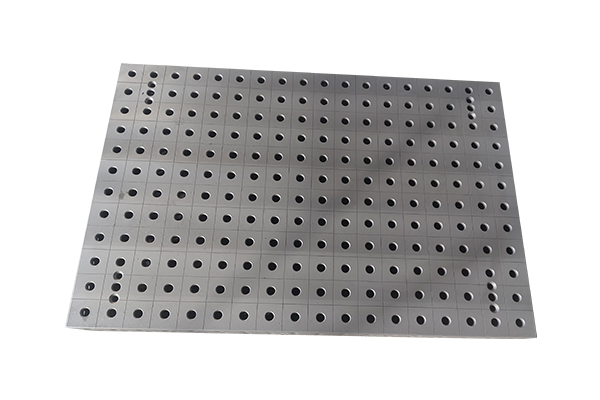
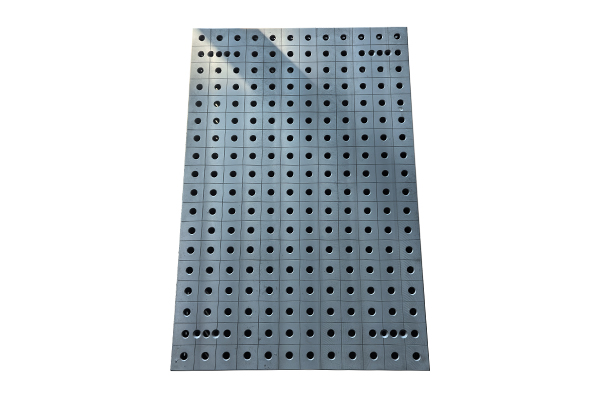
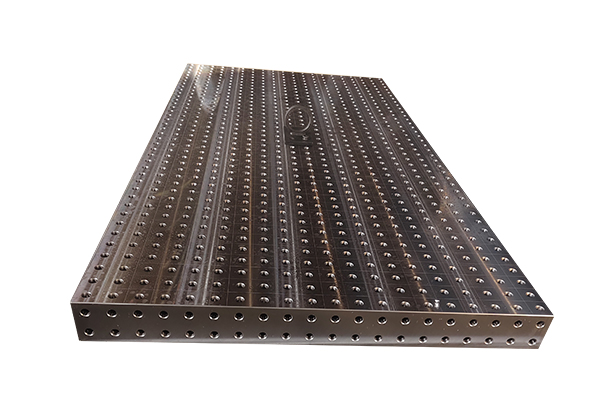
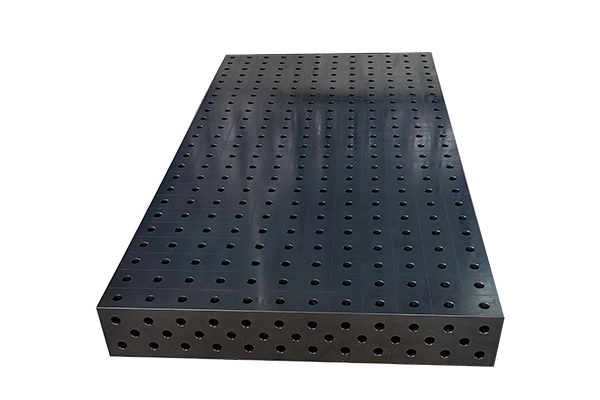
A Modular Welding Platform is a precision-machined table system combined with standardized holes, slots, and modular accessories. It serves as the base for positioning, clamping, and aligning workpieces during welding.
Instead of designing a dedicated fixture for every part, operators configure a layout directly on the Modular Welding Platform using interchangeable modules. This approach reduces setup time and increases manufacturing flexibility.
Factory production ensures that every platform follows strict dimensional tolerances, making layouts repeatable across batches and projects.
Core Structural Elements of a Modular Welding Platform
The performance of a Modular Welding Platform depends on its structural design.
Platform Base and Table Surface
The base is typically manufactured from high-strength steel or cast material. Precision machining ensures flatness, parallelism, and rigidity.
Manufacturer-level production processes apply stress relief and surface treatment to maintain long-term stability under welding heat and heavy loads.
Hole Grid System
The hole grid is the core structural feature.
It allows:
·Vertical and horizontal positioning
·Quick installation of accessories
·Accurate repeatability
Each hole is CNC-machined during factory production to ensure consistent spacing and perpendicularity, supporting reliable modular assembly.
Side Faces and Vertical Reference Surfaces
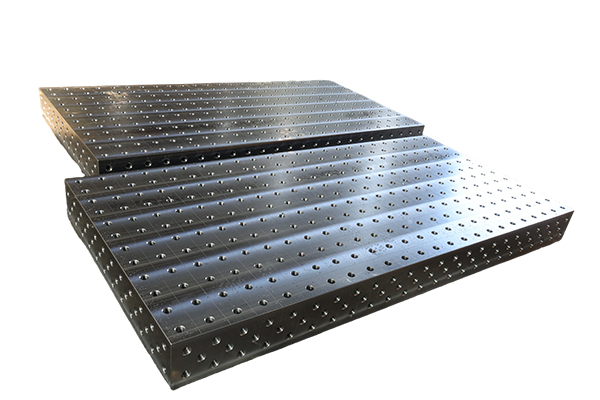
A quality Modular Welding Platform provides side faces for three-dimensional positioning.
These surfaces allow:
·Vertical clamping
·Squaring of workpieces
·Multi-angle assembly
Factory-controlled production ensures these faces maintain precision after long-term use.
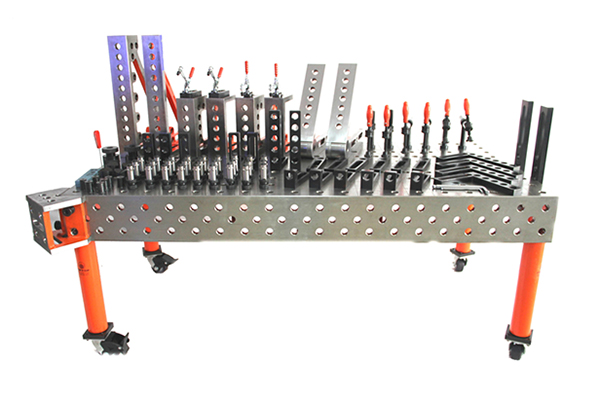
Modular Locating Components
Locating modules include:
·Locating pins
·Stops
·Angle plates
·Squares
These components define reference points for parts. Combined with the grid, they create a structured positioning system for welding accuracy.
Clamping System
Clamps secure the workpiece to prevent movement during welding.
Common clamp types:
·Quick-release clamps
·Vertical clamps
·Horizontal clamps
·Hydraulic or mechanical clamps
Proper integration of clamping modules ensures consistent geometry during production cycles.
How the Modular Welding Platform Structure Works
The working principle of the Modular Welding Platform is based on standardized reference points and modular assembly.
Operators first place locating pins into the grid to establish datum positions. Then angle plates and stops are added to support the workpiece. Finally, clamps fix the components in place before welding begins.
Because every module references the same grid, the structural system guarantees repeatability across multiple setups. Manufacturer-controlled production ensures each platform matches the same tolerance standards, enabling batch use across factory lines.
Structural Advantages for High Precision Welding
Structural stability is critical in welding.
The Modular Welding Platform structure supports:
·Accurate geometry control
·Reduced distortion
·Stable load bearing
·Consistent alignment
Through precision machining and factory-level inspection, production platforms maintain flatness and squareness even under thermal stress.
Scalability and Modular Expansion
Another advantage of the Modular Welding Platform structure is scalability.
Manufacturers can:
·Connect multiple tables
·Expand working areas
·Add vertical towers
·Integrate automation
This modular design allows the platform to grow with production needs without redesigning tooling systems.
Integration with Automation Systems
Modern welding operations use robotic and automated solutions.
The Modular Welding Platform structure integrates with:
·Robotic welding arms
·Automated clamping
·Sensor positioning
·Digital layout planning
Factory production consistency ensures compatibility across different automated cells.
Durability and Load Capacity
A professional Modular Welding Platform manufacturer designs platforms for industrial durability.
Structural features include:
·Heat-treated surfaces
·High load capacity
·Anti-corrosion coatings
·Rigid internal frames
These features support long-term production under continuous operation conditions.
Manufacturing Quality and Factory Production
Selecting a platform involves evaluating manufacturing capability.
A reliable Modular Welding Platform manufacturer with factory production and bulk supply strength offers:
·CNC machining precision
·Surface treatment control
·Batch consistency
·Quality inspection systems
·Stable delivery
Factory-controlled production ensures each Modular Welding Platform performs consistently across different industrial projects.
Typical Applications of a Modular Welding Platform
The Modular Welding Platform structure supports:
·Automotive body welding
·Construction machinery fabrication
·Steel frame assembly
·Rail equipment production
·General metal fabrication
Its modular nature adapts easily to custom and batch production environments.
Maintenance and Structural Longevity
To preserve structural accuracy, users should:
·Clean hole grids regularly
·Inspect locating modules
·Protect surfaces from spatter
·Check flatness periodically
Proper maintenance extends service life and ensures stable production performance.
Conclusion: Why Modular Welding Platform Structure Matters
The Modular Welding Platform structure is the foundation of precise, flexible, and efficient welding operations. Its modular grid, rigid base, and standardized accessories allow manufacturers to build custom fixtures quickly while maintaining accuracy.
By working with a professional factory-based manufacturer with standardized production and bulk supply capability, users ensure that each Modular Welding Platform delivers reliable performance in demanding industrial environments.
As manufacturing continues to evolve, the Modular Welding Platform remains an essential structural solution for high-precision, scalable welding production.
Modular Welding Platform systems built on manufacturer-level production and factory quality control continue to support modern industrial welding efficiency.
References
GB/T 7714:Asada H. Kinematic analysis of workpart fixturing for flexible assembly with automatically reconfigurable fixtures[J]. IEEE Journal on Robotics and Automation, 2003, 1(2): 86-94.
MLA:Asada, Haruhiko. "Kinematic analysis of workpart fixturing for flexible assembly with automatically reconfigurable fixtures." IEEE Journal on Robotics and Automation 1.2 (2003): 86-94.
APA:Asada, H. (2003). Kinematic analysis of workpart fixturing for flexible assembly with automatically reconfigurable fixtures. IEEE Journal on Robotics and Automation, 1(2), 86-94.
 Recommended Products
 Contact Us
—— Hotline:+86 13833738896
—— Hotline:+86 17332777263
—— Email:gongliliangju@163.com
—— Whatsapp:+8615832706206
—— Whatsapp:+8615931710409
—— Address:Beihan Village, Haocun Town, Botou City, Cangzhou City, Hebei Province, China