





NewsDetails
Modular Welding Platform for Flexible Industrial Manufacturing
author:jinchang time:2026-05-11 19:29:42 click:125
Modular Welding Platform for Future Manufacturing
Modular Welding Platform technology is becoming a critical part of modern manufacturing systems. As industrial production shifts toward automation, flexible assembly, and high-precision fabrication, manufacturers increasingly require welding solutions that can adapt to multiple product structures and changing production demands.
Compared with conventional fixed welding fixtures, a Modular Welding Platform offers significantly higher flexibility, improved setup efficiency, and better dimensional accuracy. These advantages make modular systems highly suitable for automotive, heavy equipment, aerospace, rail transit, and steel fabrication industries.
What Is a Modular Welding Platform?
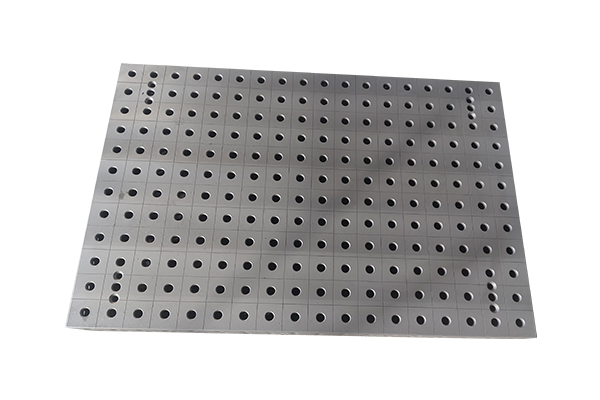
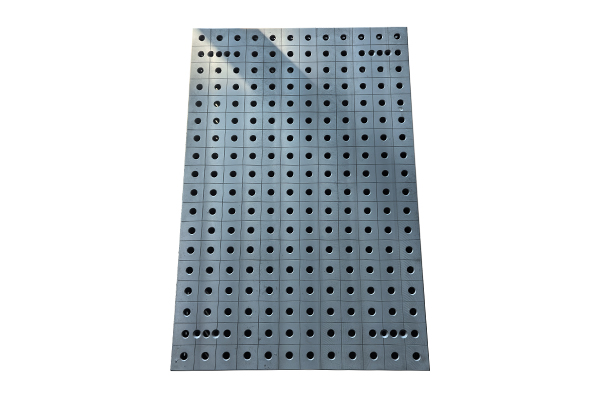
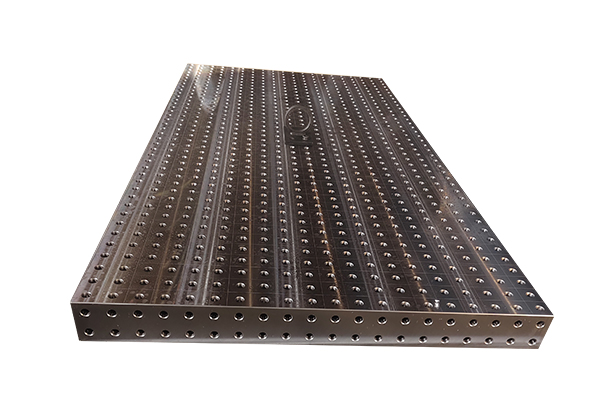
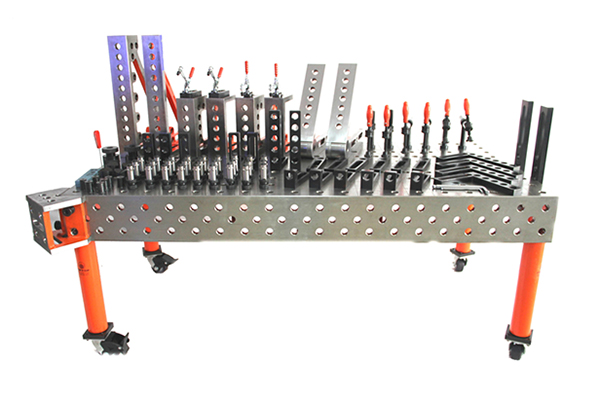
A Modular Welding Platform is a configurable welding fixture system composed of precision-machined tables, positioning elements, clamping tools, and interchangeable modular components. The platform allows operators to assemble customized fixture layouts based on different workpiece geometries and welding processes.
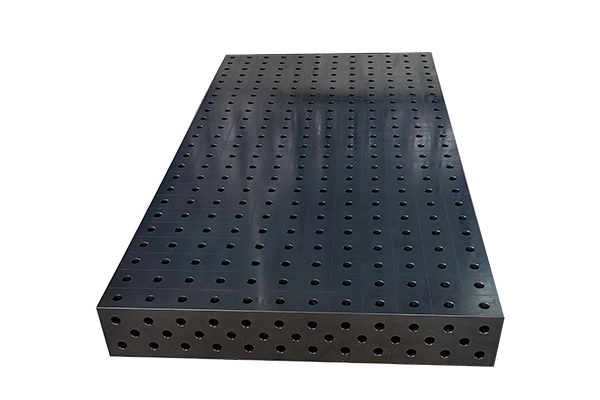
Most modern platforms utilize standardized hole grids and precision positioning systems to ensure repeatable fixture installation. This design dramatically reduces setup time when switching between product models or production batches.
Why Modular Welding Systems Matter
Manufacturing environments today demand shorter production cycles and higher customization capability. Traditional dedicated fixtures are often expensive, difficult to modify, and inefficient for low-volume or mixed-product production.
A Modular Welding Platform addresses these limitations by enabling rapid fixture reconfiguration. Manufacturers can use the same platform structure for multiple product lines, improving equipment utilization while reducing tooling investment.
In lean manufacturing systems, modular welding solutions also support faster production changeovers and reduced downtime.
Structural Advantages of Modular Welding Platforms
The structural design of a Modular Welding Platform directly influences welding accuracy and long-term stability. High-quality platforms are typically manufactured from stress-relieved steel or cast iron to minimize deformation during heavy-duty welding operations.
Key structural advantages include:
High flatness accuracy
Excellent rigidity
Strong load-bearing capacity
Repeatable positioning precision
Corrosion-resistant surface treatment
Precision-machined hole patterns allow fixture components to maintain accurate alignment even after repeated assembly cycles.
Precision and Repeatability in Welding
One major benefit of a Modular Welding Platform is improved dimensional consistency. Welding distortion and positioning errors are common challenges in industrial fabrication, especially for large structural components.
Modular positioning elements help operators maintain accurate workpiece alignment throughout the welding process. Repeatable fixture placement also improves batch consistency and reduces secondary machining requirements.
In robotic welding applications, positioning precision becomes even more important because automated systems rely heavily on repeatable workpiece coordinates.
Automation Compatibility
As factories increasingly adopt robotic welding systems, the demand for automation-compatible fixtures continues growing. A modern Modular Welding Platform can integrate with robotic arms, positioners, CNC systems, and automated production lines.
This compatibility improves:
Welding path consistency
Production speed
Labor efficiency
Quality control capability
Many advanced modular platforms also support digital production management and smart manufacturing integration.
Cost Efficiency and Production Flexibility
Although the initial investment in a Modular Welding Platform may be higher than simple dedicated fixtures, long-term operating costs are often significantly lower.
Because modular components are reusable, manufacturers can reduce the need for custom fixture fabrication when introducing new products. This flexibility is particularly valuable for companies handling small-batch or highly customized production orders.
Additional cost-saving benefits include:
Reduced tooling inventory
Faster setup time
Lower maintenance cost
Improved production scalability
These advantages help manufacturers improve return on investment over time.
Applications Across Industries
A Modular Welding Platform is widely used in multiple industrial sectors, including:
Automotive manufacturing
Construction machinery
Aerospace fabrication
Energy equipment production
Shipbuilding
Metal structure fabrication
In heavy equipment manufacturing, modular platforms support the welding of complex frames and large structural assemblies with high dimensional accuracy.
Future Trends in Welding Manufacturing
Future welding production systems will increasingly emphasize automation, digitalization, and intelligent manufacturing. A Modular Welding Platform serves as an important foundation for these advanced production environments.
Emerging trends include:
Robotic collaborative welding
AI-assisted fixture positioning
Smart measurement systems
Digital twin integration
Flexible manufacturing cells
Manufacturers investing in modular welding infrastructure today are better positioned to adapt to future industrial requirements.
Conclusion
A Modular Welding Platform provides the flexibility, precision, and efficiency required for modern industrial manufacturing. Its modular structure enables faster production changeovers, improved welding consistency, and better compatibility with automated production systems.
As manufacturing industries continue moving toward intelligent and flexible production models, the Modular Welding Platform will remain a key technology supporting high-quality fabrication and long-term operational efficiency.
References
Cary, H. B. Modern Welding Technology
Kalpakjian, S. Manufacturing Engineering and Technology
Kou, S. Welding Metallurgy
ISO 2768 General Tolerance Standards
Flexible fixture systems in robotic welding research (sciencedirect.com )
 Recommended Products
 Contact Us
—— Hotline:+86 13833738896
—— Hotline:+86 17332777263
—— Email:gongliliangju@163.com
—— Whatsapp:+8615832706206
—— Whatsapp:+8615931710409
—— Address:Beihan Village, Haocun Town, Botou City, Cangzhou City, Hebei Province, China