





NewsDetails
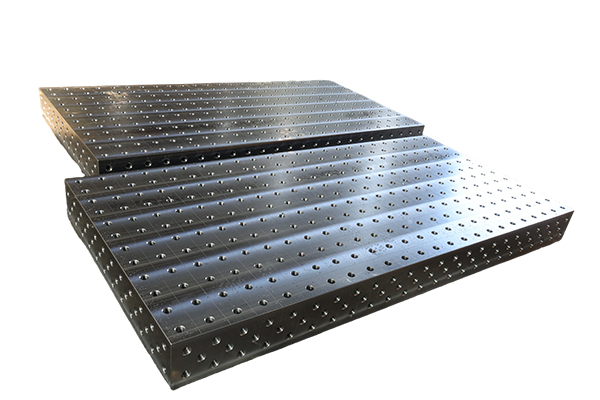
Compared to a granite platform, what are the main advantages and disadvantages of a cast iron surface plate?
author:admin time:2026-01-17 14:45:18 click:111
Compared to a granite platform, what are the main advantages and disadvantages of a cast iron surface plate?
The main advantages of cast iron surface plates are high strength and impact resistance: being made of metal, they are resistant to impact, less prone to chipping, and suitable for use in workshop environments with impacts such as hammering, assembly, and heavy workpiece marking.
Strong carrying capacity: With a reinforced internal structure, it has a high load-bearing capacity per unit area and good stability, making it suitable for the inspection and assembly of heavy machinery components.
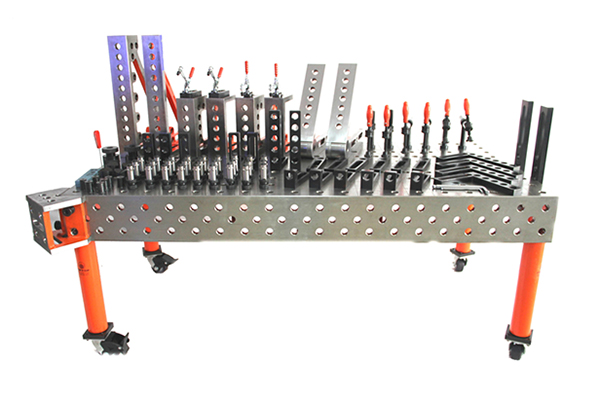
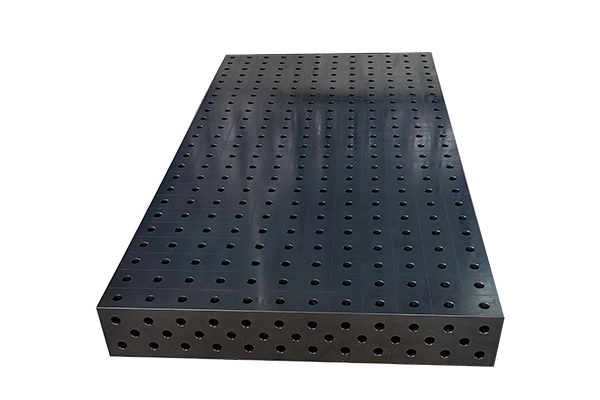
Easy to process and modify: It can be processed with T-slots, round holes, threaded holes, etc., facilitating the installation of fixtures and locating pins, with strong functionality and expandability.
Magnetic: Directly compatible with magnetic bases, clamps, and tooling, making it very convenient and quick to fix.
High cost-effectiveness (large size): In large-size specifications (such as those exceeding 2 meters), the manufacturing cost is typically lower than that of high-precision granite platforms of the same size.
The main disadvantages of cast iron surface plates lie in their stability and aging characteristics: there is an issue with the release of internal stress. Even after aging treatment, long-term use may still result in micro-deformations due to stress changes, affecting the long-term accuracy and stability.
Wear and corrosion: The working surface is relatively soft and prone to scratching and wear. Additionally, being made of iron, it is susceptible to rusting in humid environments, necessitating regular maintenance.
High thermal expansion coefficient: sensitive to changes in ambient temperature, with temperature fluctuations having a more significant impact on accuracy than granite. Constant temperature is required for high-precision measurements.
Self-magnetism: For certain precision measurements (such as those involving magnetically sensitive components), self-magnetism may become an interfering factor.
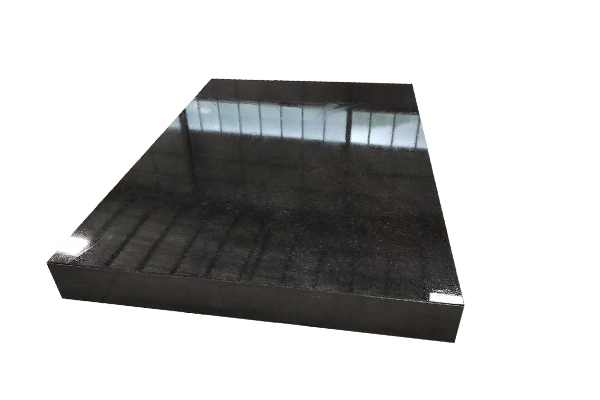
The core advantage of granite platforms (as a comparative reference) lies in their excellent long-term stability: after millions of years of natural aging, the internal stress of the stone has been completely eliminated, making it virtually impervious to deformation and ensuring the best precision retention.
High hardness and wear resistance: The hardness of the working surface exceeds that of cast iron, making it highly resistant to scratching and ensuring an extremely long service life.
Non-magnetic and insulating: suitable for magnetic and electromagnetic sensitive work environments.
Low coefficient of thermal expansion: insensitive to temperature changes, ensuring more stable accuracy in normal temperature workshop environments.
Easy to maintain: It is rust-resistant and resistant to acids and alkalis, requiring only occasional wiping and almost no special anti-rust maintenance.
 Recommended Products
 Contact Us
—— Hotline:+86 13833738896
—— Hotline:+86 17332777263
—— Email:gongliliangju@163.com
—— Whatsapp:+8615832706206
—— Address:Beihan Village, Haocun Town, Botou City, Cangzhou City, Hebei Province, China