





NewsDetails
Flexible Modular Fixturing System: Long-Term Stability Guide
author:jinchang time:2026-06-15 10:57:11 click:160
Investing in a flexible modular fixturing system is a strategic decision that pays returns over years - but only if the system maintains its accuracy and structural integrity over time. Unlike a dedicated fixture that serves one part and gradually wears into its specific role, a modular system must perform reliably across dozens of different configurations, each placing different stresses on components and base plates. Understanding how to preserve flexible modular fixturing system long-term stability protects your investment, ensures consistent part quality, and extends service life well beyond the initial warranty period.
What Causes Modular Fixturing Systems to Degrade?
Three primary mechanisms degrade a flexible modular fixturing system over time: component wear, base plate distortion, and thread damage. Component wear occurs at locating pin surfaces, clamp bearing faces, and support post contact points - areas where metal contacts metal under load during repeated assembly and disassembly cycles. Base plate distortion results from impact events (dropped components, collision with forklifts), uneven clamping forces, and thermal cycling during welding operations. Thread damage in base plate holes degrades the precision fit between components and the grid, reducing positional accuracy progressively.
Base Plate Maintenance for Long-Term Stability
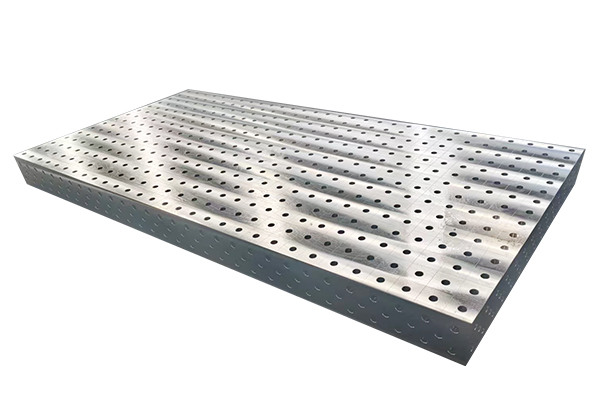
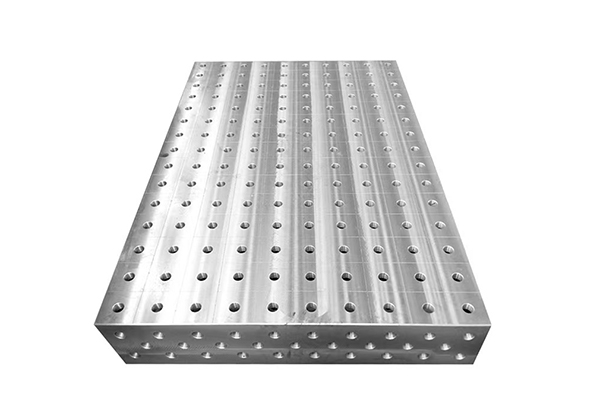
The base plate is the most critical component for flexible modular fixturing system long-term stability. Protect it by: (1) Using rubber-tipped or nylon-faced clamps when the workpiece contact area is near the plate surface, preventing direct metal-on-metal contact. (2) Never using the base plate as a work surface for grinding, hammering, or prying. (3) Covering the base plate with a protective mat or board when not in active use to prevent dropped tools and debris from damaging holes. (4) Inspecting the plate surface quarterly for dents, gouges, or corrosion, and addressing any damage immediately. Cast iron base plates should be stored in a dry environment and treated with a light protective oil coating to prevent surface rust.
Component Inspection and Replacement Schedules
Locating pins, support posts, and clamping components are wear items that require periodic inspection and eventual replacement. Establish a documented schedule: inspect locating pins monthly for wear at the seating surface (replace when wear exceeds 0.01 mm), check support posts for flatness and dimensional accuracy quarterly, and evaluate clamping arms for play and wear annually. Keep a replacement inventory of the most commonly used components to avoid production downtime when wear exceeds acceptable limits. A flexible modular fixturing system with a proactive component replacement program maintains accuracy for 10-15 years or longer.
Thread Protection in Grid Holes
Thread integrity in base plate holes is fundamental to flexible modular fixturing system long-term stability. Damaged threads cause loose component seating, positional drift, and clamp slippage. Protect threads by: (1) Using thread protectors or plugs when holes are not in use, preventing debris contamination. (2) Cleaning holes with compressed air and a thread brush before every fixture assembly. (3) Never forcing cross-threaded components - if resistance increases suddenly, back out immediately and inspect. (4) Running a thread tap through each hole annually to remove any accumulated debris or minor thread damage. For systems with reamed (non-threaded) locating holes, maintain H7 tolerance by reaming worn holes back to specification every 2-3 years.
Managing Thermal Stress in Welding Environments
Welding environments subject a flexible modular fixturing system to repeated thermal cycles that can cause gradual base plate distortion and component dimensional changes. Mitigate thermal effects by: (1) Using cast iron base plates, which have lower thermal expansion coefficients than steel. (2) Positioning heat shields between the weld zone and nearby base plate areas when possible. (3) Allowing base plates to return to ambient temperature between intensive welding sessions. (4) Monitoring base plate flatness annually for any thermal warping, and re-machining the surface if flatness degrades beyond 0.1 mm per meter. Shops that implement these measures report maintaining original accuracy specifications for 5-8 years in active welding service.
Documentation and Traceability for Stability Management
Effective flexible modular fixturing system long-term stability management requires documentation. Maintain a fixture management log recording: base plate calibration results, component inspection findings, replacement dates, incident reports (any impact or damage events), and user feedback on positional accuracy. This documentation serves multiple purposes: it supports preventive maintenance scheduling, provides evidence during quality audits, and creates a performance history that informs future purchasing decisions. Shops with documented fixture management programs experience 40-50 percent fewer fixture-related quality issues compared to those without.
Storage Practices That Extend Service Life
How you store your flexible modular fixturing system between uses directly affects its longevity. Base plates should be stored flat on a stable, level surface - never propped on edge or stacked without protective barriers between plates. Components should be organized in shadow-board storage systems that prevent contact between precision surfaces. Threaded holes on stored plates should have plastic or nylon plugs installed to prevent debris contamination and thread damage. In humid environments, apply a thin rust-preventive coating to base plate surfaces and store components in climate-controlled areas where possible.
FAQ: Flexible Modular Fixturing System Long-Term Stability
How long does a flexible modular fixturing system last?
With proper maintenance, a quality modular system lasts 10-15 years. Cast iron base plates can exceed 20 years. Component replacement cycles vary: locating pins typically need replacement every 1-2 years in heavy use, while base plates require no replacement when properly maintained.
What is the most common cause of long-term accuracy loss?
Thread damage in base plate holes and locating pin wear are the two most common causes. Both are preventable with regular inspection and cleaning. Impact damage from dropped tools or components is the most common acute cause of accuracy loss.
Can a degraded base plate be reconditioned?
Yes. Surface re-machining can restore flatness to specification. Hole re-reaming can bring locating holes back to H7 tolerance. Thread repair taps can restore damaged threads. These services typically cost 10-20 percent of a new base plate price and extend service life significantly.
Does frequent reconfiguration accelerate wear?
Yes, but the effect is manageable. Each assembly cycle causes minor wear at contact surfaces. Using consistent torque during clamping and cleaning surfaces before each assembly limits wear rate. The tradeoff between flexibility and wear is overwhelmingly favorable - the cost of periodic component replacement is far lower than maintaining dozens of dedicated fixtures.
Should I buy extended warranty or maintenance contracts?
For high-use facilities, an annual maintenance contract can be worthwhile. It provides professional calibration, early wear detection, and priority replacement service. For moderate-use operations, self-managed maintenance with documented inspection schedules is typically sufficient.
Conclusion
Preserving flexible modular fixturing system long-term stability is not complicated, but it requires consistent discipline. Protect base plates from impact and corrosion, inspect and replace worn components on schedule, maintain thread integrity in grid holes, manage thermal stress in welding environments, document all maintenance activities, and store components properly when not in use. These practices collectively ensure that your modular system delivers the same accuracy and reliability in year ten as it did on day one - maximizing ROI and protecting a significant capital investment for the long term.
References
Bi, Z.M. and Zhang, W.J. (2001). Flexible fixture design and automation: Review and future directions. International Journal of Advanced Manufacturing Technology, 17(4), 266-277.
Rong, Y. and Bai, Y. (2000). Modular fixture element assembly and accuracy analysis. International Journal of Production Research, 38(14), 3103-3114.
Kumar, S. and Nee, A.Y.C. (1995). Development of a modular fixture design system. Journal of Intelligent Manufacturing, 6(4), 263-274.
Boerma, J.R. and Kals, H.J.J. (1989). FIXES, a system for automatic selection of set-up clamping elements. Annals of the CIRP, 38(1), 443-446.
 Recommended Products
 Contact Us
—— Hotline:+86 13833738896
—— Hotline:+86 17332777263
—— Email:gongliliangju@163.com
—— Whatsapp:+8615832706206
—— Whatsapp:+8615931710409
—— Address:Beihan Village, Haocun Town, Botou City, Cangzhou City, Hebei Province, China